
Solid State Logic SIX VS Big SiX: How are they different?
Tuner and bridge hardware, humbuckers, and nut material.
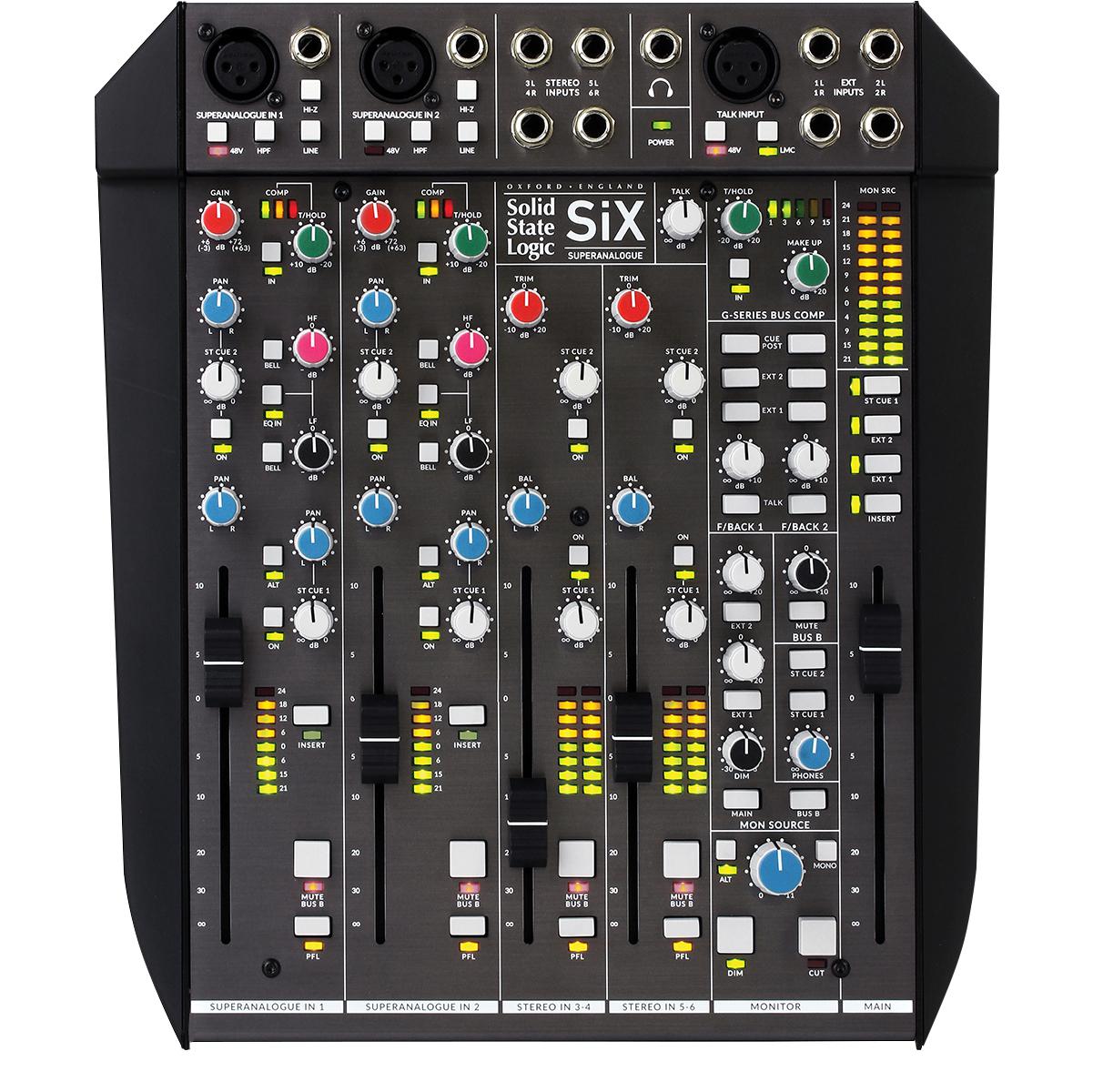
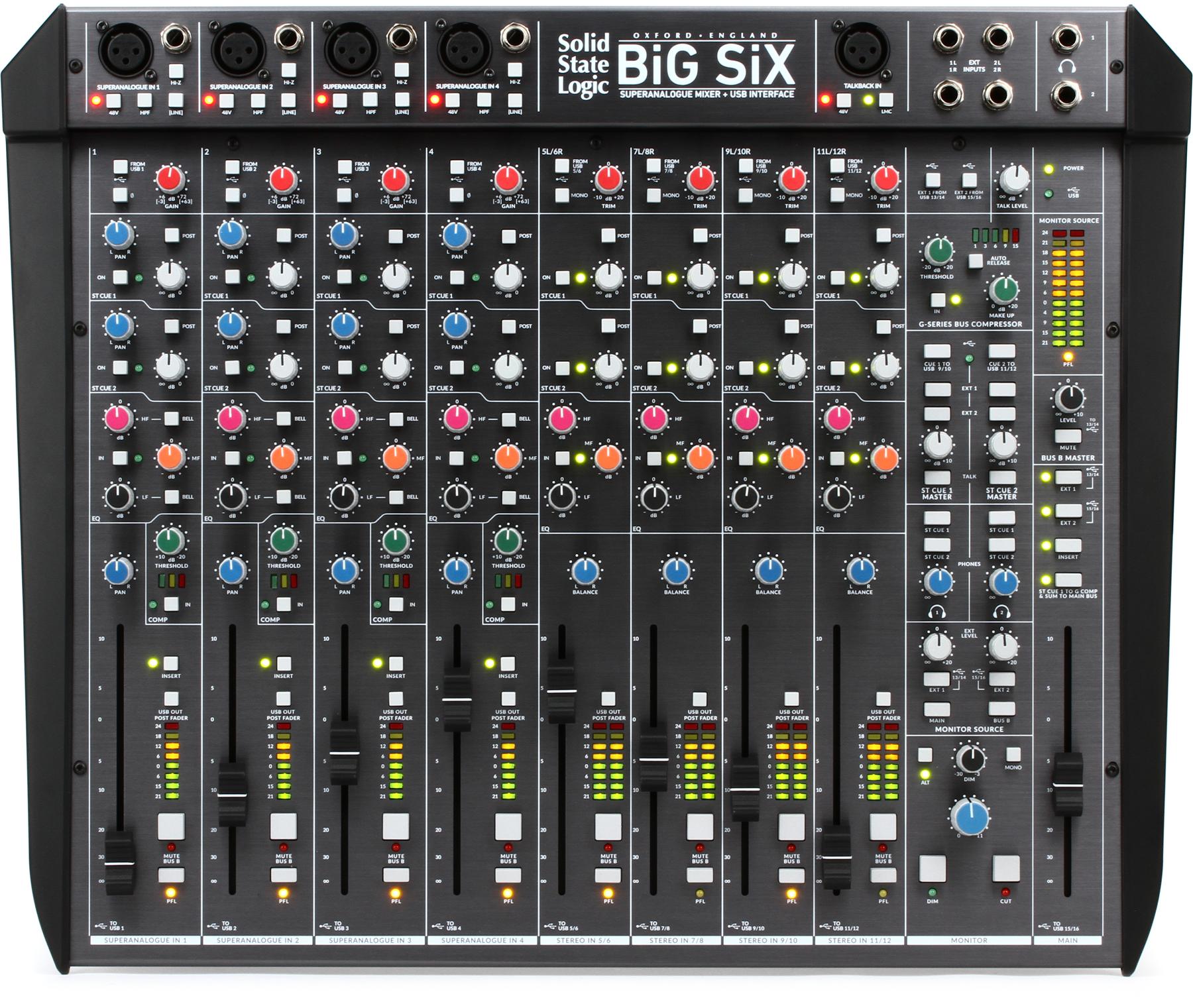
The main differences lie in the Big SIX's expanded channel count, including 4 mono and 4 stereo channels versus the SIX's 2 mono and 2 stereo channels, and its inclusion of a 16-in/16-out USB-C audio interface, offering greater flexibility and connectivity for modern studio environments. Additionally, the Big SIX features a more comprehensive 3-band EQ derived from the SSL E Series console across all channels, compared to the 2-band EQ on the SIX's first two channels. These distinctions make the Big SIX a more versatile and feature-rich option, suited for larger projects and more complex routing needs, while the SIX remains a compact, yet powerful choice for high-quality recording and mixing, albeit on a smaller scale.


Solid State Logic SIX

Solid State Logic Big SIX
| Specification | Solid State Logic SIX | Solid State Logic Big SIX |
|---|---|---|
| Type | Analog Console | Analog Mixer with USB Interface |
| Channels | 6 | 18 Inputs, 8 Fader Channels |
| Faders | 5 x 100mm | 9 x 100mm |
| Mic Preamps | 2 x XLR (SuperAnalogue) | 4 x XLR |
| Phantom Power | Yes | Yes (per channel) |
| Line Inputs | 2 x 1/4" (line/Hi-Z), 4 x 1/4" TRS (2 x stereo line), 4 x 1/4" TRS (2 x stereo SuperAnalogue line) | 8 x 1/4" (4 x stereo channel), 4 x 1/4" (2 x external stereo input) |
| Outputs - Main | 2 x XLR (main out), 2 x 1/4" TRS (main monitor), 2 x 1/4" TRS (alt monitor) | 2 x 1/4" TRS (main), 2 x 1/4" TRS (main monitor), 2 x 1/4" TRS (alt monitor) |
| Aux Sends | 2 x Cue Sends | 2 x Stereo Cue Send (pre/post) |
| Busses/Groups | 1 x Bus B | 2 x 1/4" TRS (Bus B out) |
| Inserts | 2 x DB-25 In/Out (channel, main) | 2 x 1/4" TRS (L/R main bus insert send), 2 x 1/4" TRS (L/R main bus insert return) |
| Headphones | 1 x 1/4" TRS | 2 x 1/4" |
| USB Interface | Not applicable | USB-C 16 x 16 |
| EQ Bands | 2-band EQ, Switchable Bell Curve | 3-band EQ, High/Low Bell Curve, Mid Frequency Shift |
| Dimensions | 4.7" x 10.6" x 12.2" | 5.6" x 19.3" x 15.4" |
| Weight | 7.7 lbs. | 15.0 lbs. |
| A/D Resolution | Not applicable | 24-bit/96kHz |
| Computer Connectivity | Not applicable | USB (16 x 16) |
| OS Requirements | Not applicable | Mac: OS X 10.14 or later, PC: Windows 10 or later |
| Power Source | 5-pin 15V DC Power Supply (included) | 4-pin 15V DC power supply (included) |
| Rackmountable | Not specified | Optional rackmount kit (sold separately) |
Solid State Logic SIX and Big SIX Price Tracker
Prices updated Fri, August 21st, 2026.
Major Differences Between the Two Mixers
- Channel Configuration: The SIX has 2 mono and 2 stereo channels, while the Big SIX offers 4 mono and 4 stereo channels.
- Input Capability During Mixdown: SIX can sum up to 12 inputs, whereas Big SIX can sum up to 18 inputs during mixdown.
- EQ Bands: The SIX has a 2-band EQ for the first two mono channels, while the Big SIX features a 3-band EQ derived from the SSL E Series console for all channels.
- USB Interface: The Big SIX includes a 16-in/16-out USB-C audio interface with 24-bit/96kHz AD/DA converters, not available on the SIX.
- Headphone Outputs: The SIX has one headphone output, while the Big SIX has two, accommodating more monitoring flexibility.
- Physical Size and Weight: The Big SIX is larger and heavier, indicating a more substantial build suitable for a broader range of studio setups.
Solid State Logic SIX and Big SIX Similarities
- Both consoles feature SuperAnalogue mic preamps with +72dB of gain, phantom power, and a 75Hz high pass filter.
- Each has SSL compression with program-dependent attack time, fixed ratio and release time, and automatic makeup gain.
- G Series Bus Compressor available across the main outputs.
- Flexible routing and monitoring capabilities, including cue buses for artist mixes, main and alternate monitor outputs with a monitor source matrix, and mono check, dim, and cut functions.
- Full-size 100mm faders for precise control.
- Both have a completely balanced signal path.
More Mixer and Pro Audio Comparisons
Written by Guitar Chalk on Pro Audio & Price Guides
Written by Gear Consultants on Pro Audio & Comparisons
We link to products on Sweetwater that help support our site and keep the lights on. If you click through our orange buttons, we might earn a commission at no extra cost to you. Thank you all for your generous support over the years! ~ Bobby and Danielle
Our disclosure↬


Comment Policy: You're down to leave a comment? That's awesome. Keep in mind that comments are moderated and rel="nofollow" is in use. Please avoid any spammy keywords or a domain as your name, otherwise your comment will be deleted. Let's stay on topic, keep questions relevant and have a meaningful conversation. All the best.