
Guitar Chalk · Amp Settings Resource
Can't Stop (Red Hot Chili Peppers) — Amp Settings & Tone Guide
Sometimes we list alternative gear on these posts, as an affordable and more practical option that's still close to the artist's actual sound and style. Some specifics of this song's exact recorded gear are genuinely disputed — see the notes below rather than treating any single claim as settled fact.
Leave a comment or question below

Quick Reference
Documented Amp Marshall Major 200W, often paired with a Fender Blackface Showman
Also Cited 1960s Fender Deluxe Reverb (per a direct 2002 Frusciante interview)
Practical Alternative Marshall JCM800 — closer to what most players can actually source
Guitar Either a Telecaster (bridge pickup) or '62 Stratocaster — genuinely disputed
Core Pedal Boss CE-1 — shapes the fundamental tone, not just chorus
Bridge / Solo EHX Electric Mistress flanger (bridge), Big Muff Pi (solo)
A note on the amp and guitar: There's no single confirmed rig for this exact song. Frusciante named his 1962 Stratocaster as his main guitar for the By the Way sessions overall, but tone analysts point to this specific song's live performance history (played almost exclusively on his 1960 Fender Custom Telecaster) and its Tele-like brightness as evidence it may have been tracked on the Tele instead. On amps, multiple interviews and gear-history sources tie this era to a Marshall Major 200W — a rare vintage 200-watt head most players can't easily source — sometimes run alongside a Fender Blackface Showman. Frusciante also mentioned a 1960s Fender Deluxe Reverb specifically for this album in one interview. We're presenting the documented options honestly rather than picking one and calling it settled.
Amp Settings
Practical Alternative — Marshall JCM800 (or similar British high-headroom amp)
Since the Marshall Major 200W is rare vintage gear, a JCM800 or similar Marshall combo gets you into the right tonal neighborhood — bright, present, and slightly compressed, with enough headroom to stay clean-ish under the funk rhythm attack. Keep gain moderate; this is not a saturated, high-gain tone.
Bass
5
Middle
7
Treble
6
Presence
5
Gain
6
Volume
5
Reverb
2
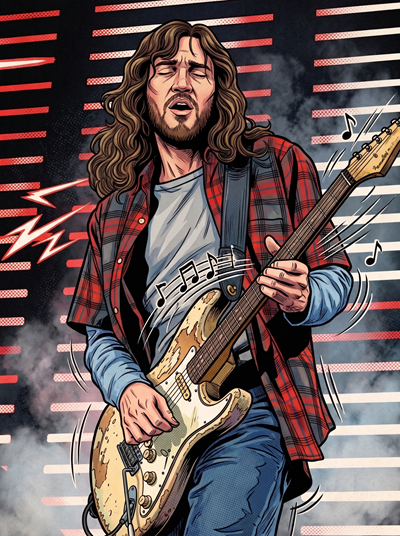
The Documented Effects Chain for This Song
Core Tone
Boss CE-1 Chorus Ensemble
Not just used for chorus — its preamp circuit shapes the fundamental body of the rhythm tone. This is doing more foundational work than the name suggests.
Bridge Section
EHX Electric Mistress Flanger
The wobbly, swirling texture in the second part of the bridge comes from this flanger — not a phaser or chorus, specifically a flanger.
Solo
Electro-Harmonix Big Muff Pi
The fuzzed-out solo tone comes from a Big Muff Pi — a distinctly different, thicker character than a standard distortion or overdrive pedal.
Guitar-Related Tone Tips
1. Volume
Set the guitar volume knob to full (10) for maximum clarity and dynamics. Adjust amp gain moderately to avoid excessive distortion — keep it crunchy, not overly saturated. This is a rhythm-driven tone, not a lead-driven one.
2. Tone
Guitar tone knob should be set to full (10) for brightness and clarity. Use amp EQ to emphasize treble and mids while keeping bass tight and not overpowering. A slight low-mid scoop reduces muddiness and lets the funk riff breathe.
3. Pickup Selector
Bridge pickup for the bright, cutting attack present in the main riff — this holds true whether you're using a Telecaster or a Strat. Optionally blend in the middle pickup on a Strat for a slightly rounder, funkier tone.
4. Humbucker or Single Coil Preferred?
Single-coil pickups are strongly preferred for their sharp, articulate, and slightly twangy response — this holds for both candidate guitars discussed above. They deliver the percussive clarity and funk character essential to the song's rhythm guitar parts.
5. Ideal Guitar
Either a Fender Stratocaster with three single coils or a Fender Telecaster with a bright bridge pickup will get you close — see the dispute note above for why we're not picking just one. A maple fretboard adds brightness and snap either way; an alder or ash body gives balanced tone and sustain consistent with Frusciante's usual gear.
Tone Tips and Best Practices
01
Use a clean bridge pickup tone with moderate gain for the rhythm sections. This isn't a distorted rhythm tone at its core — the crunch and character come from the pedal chain and picking dynamics, not maxed-out amp gain.
02
Add a touch of compression to tighten funk-inspired staccato picking. The CE-1's preamp circuit does some of this naturally, but a dedicated compressor in front of the amp helps even out pick attack dynamics further.
03
Slight mid-scoop EQ enhances attack and clarity without losing the percussive character of the riff. Don't scoop too aggressively — this tone still needs presence to cut through a full band mix.
04
Save the flanger for the bridge section specifically. The EHX Electric Mistress is used deliberately at one point in the arrangement, not as a constant texture — apply it the same way rather than running it throughout.
05
Use palm muting and precise picking to maintain note definition and groove throughout the rhythm sections. This song's energy depends heavily on right-hand precision, more than on any single pedal or amp setting.
06
Keep reverb minimal to maintain punch and articulation. A heavily reverberant tone works against the tight, percussive funk-rock character this song depends on.
07
Match your tempo and picking dynamics to the song's energy throughout. Consistency in attack matters as much here as any specific gear choice — this is a technique-driven tone as much as a gear-driven one.
Gear Recommended for Covering Can't Stop
Fender Stratocaster or Telecaster
Either works well for clean tones and funky rhythm work — see the dispute note above on which one was likely used for this specific song.
Marshall DSL40CR
A versatile, practical amp with punchy mids for crunchy tone — a reasonable modern stand-in for the documented Marshall Major/JCM-family gear from this era.
Boss CE-1 Chorus Ensemble (or reissue)
The specifically documented core-tone pedal for this song — originals are rare and pricey, but reissues and clones capture the same preamp character.
Electro-Harmonix Electric Mistress
The specific flanger used on the bridge section — a distinctive, swirling texture that a generic chorus or phaser pedal won't quite replicate.
Electro-Harmonix Big Muff Pi
The specific fuzz used on the solo — thicker and more saturated than a standard overdrive or distortion pedal, and the historically accurate choice for this section.
Dunlop Cry Baby Wah
Useful for the broader Frusciante tonal palette across RHCP's catalog, though not specifically documented for this exact song.
Ernie Ball Regular Slinky Strings
Balanced tension and tone for funk/rock playing — a reliable standard gauge that suits the percussive rhythm attack this song calls for.
Voodoo Lab Pedal Power 2 Plus
Clean, isolated power for multiple pedals — worth having once you're running a CE-1, flanger, and fuzz together to avoid unwanted noise in the signal chain.
More Amp and Tone Settings Resources
Written by Bobby Kittleberger on Amp Settings
Written by Bobby Kittleberger on Artists & Amp Settings
We link to products on Sweetwater and REverb that help support our site and keep the lights on. If you click through our orange buttons, we might earn a commission at no extra cost to you. Thank you all for your generous support over the years! ~ Bobby and Danielle
Our disclosure↬


Comment Policy: You're down to leave a comment? That's awesome. Keep in mind that comments are moderated and rel="nofollow" is in use. Please avoid any spammy keywords or a domain as your name, otherwise your comment will be deleted. Let's stay on topic, keep questions relevant and have a meaningful conversation. All the best.