
Audio Sprockets ToneDexter II Review
Our Verdict and Review Summary
The ToneDexter reminds me of the BBE Acoustimax from back in the day, in that it produces a very natural sounding acoustic tone, making your guitar immediately sound better overall and fuller, in a way that's hard to explain. And yes, the WaveMap technology is cool, but your acoustic guitar sound with this preamp on and dialed in is far better, and not just because you can mess with the EQ. The ToneDexter gives you an "extra special something" in your acoustic tone. Highly recommend, especially for the studio.

BEST FOR: Church, studio, recording, gigs, and live shows.
TONE
95
CONTROL
88
FLEXIBILITY
92
PRICE/VALUE
85
- Interface is smooth and easy to operate.
- Tone improvement beyond just adding EQ
- Sounds great on a direct recording
- Easy learning curve
- WaveMap helps reconcile your microphone and acoustic tone.
- Very expensive by comparison to similar preamps.
- Waveform sliders are difficult to see.
The ToneDexter has hints of the BBE Acoustimax, which was a favorite acoustic preamp of mine that isn't in production anymore. Both preamps improve the overall quality of your acoustic's sound, beyond simply providing an EQ. Audio Sprockets goes a lot further by adding the a smooth digital interface that lets you EQ with waveform displays on a large (ish) LCD color screen. In my ToneDexter II review below, I'll cover tone, control, and value, as per usual.
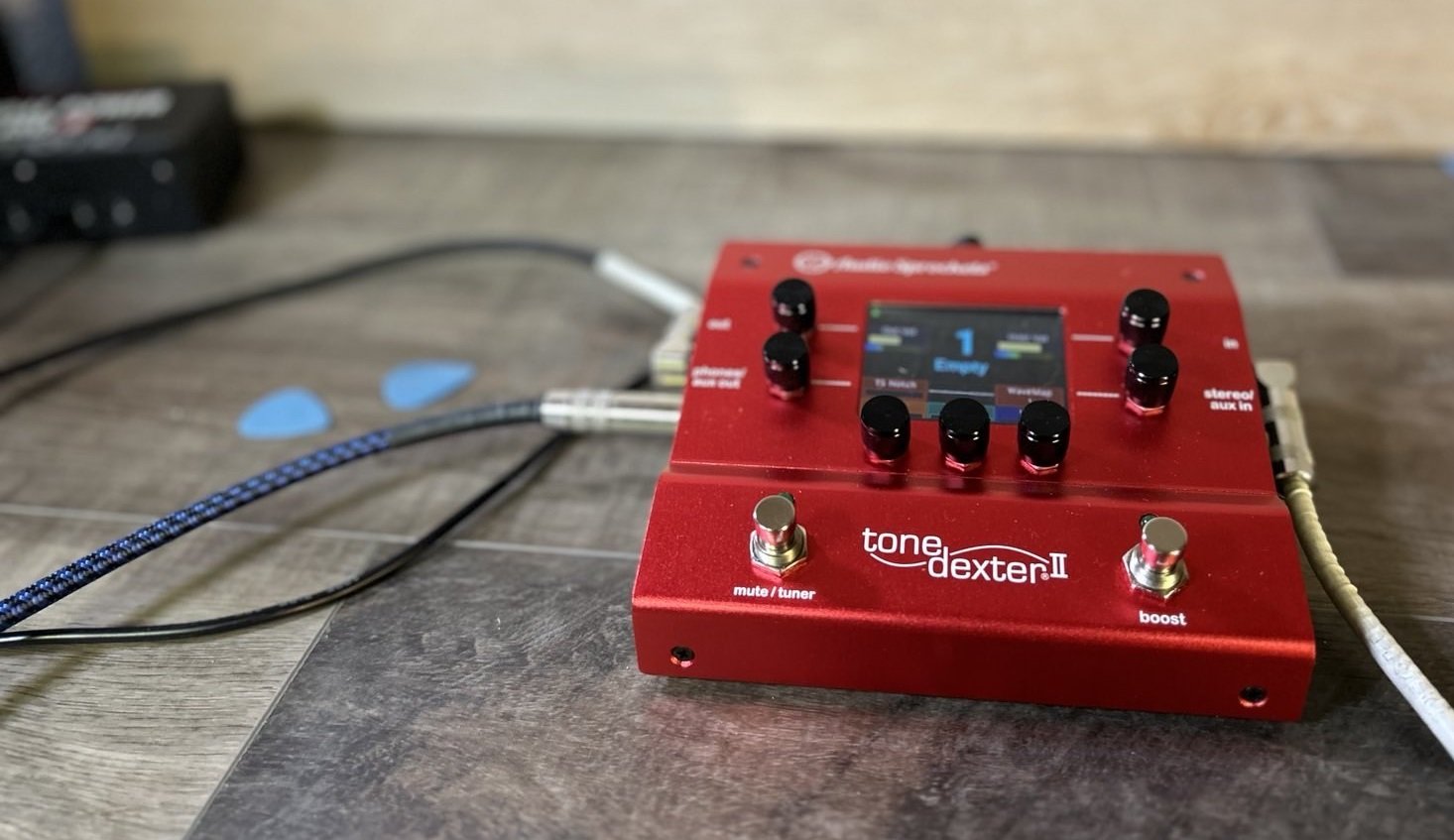
The Audio Sprockets ToneDexter II provides an immediate tone improvement, above and beyond a garden variety EQ.
ToneDexter's Versatility, EQ, and Tone Quality
I used this pedal at a smaller gig for a non-profit organization with Valerie McQueen. She was the one who tested/used the ToneDexter for most of the show. Her guitar does not have an onboard EQ, so the ToneDexter was entirely in control.
As I mentioned earlier, it's an immediate tone improvement, making the acoustic a lot more full and lively, with more nuanced dynamics.
EQ'ing in more low-end will of course help with that, but we didn't have to do a lot of tinkering to get a great sound. We were in a fancy barn that had very high ceilings and an open concept, but the sound carried very well and maintained it's natural acoustic appeal even though we weren't using a microphone.
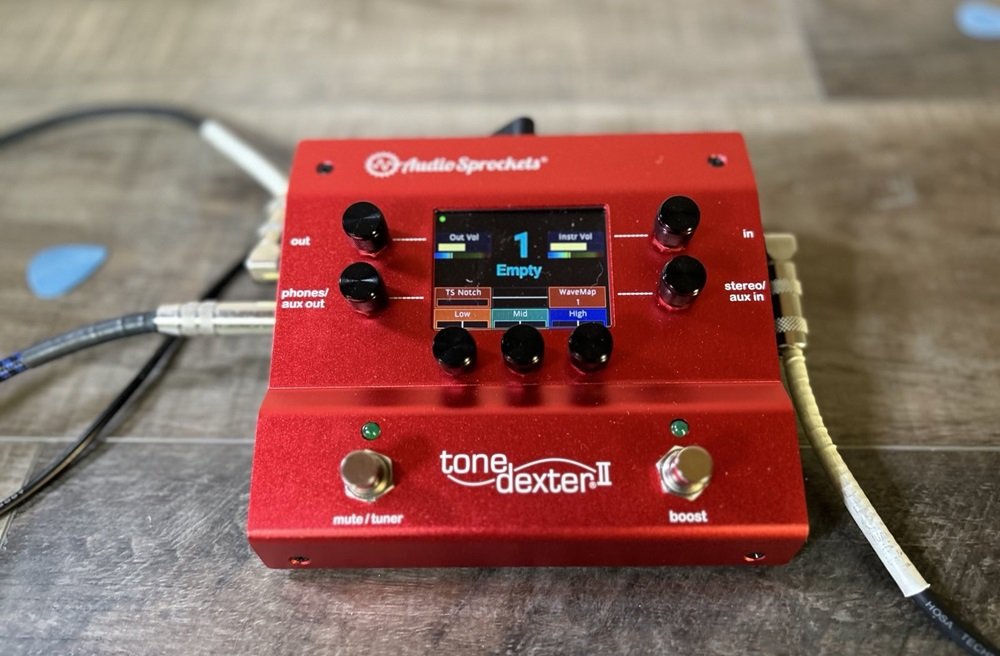
Three-band EQ, feedback suppression, LCD display, and WaveMap technology are just a few of the perks.
When I tested it at home, I was really happy with how it sounded on the recording, going directly into my Focusrite USB interface, again, without a mic. Here's the result:
Control, Simplicity, and Functionality
The controls are basic, with a three-band EQ and a notch filter that helps control feedback. A tuner and boost switch are also included. I liked how large the screen was and how each control had a waveform display so you had a graphical representation of your EQ.
Though even with the larger LCD screen, it was a bit difficult to see the waveform graphic. It wasn't a problem, because of course most pedals don't have a display like that at all, but it would have been nice to make have those display larger and then cycle through depending on what you're tweaking.
Maybe you can and I just didn't catch how to do it? Apologies to Audio Sprockets if I'm mistaken.
32 assignable presets, phantom power, and a dedicated power supply are also included.
No further complaints.
WaveMap Feature
Full disclosure: We did not test the WaveMap feature, which essentially blends your microphone into your acoustic's pickup tone (if I'm understanding it correctly), for a more "vivid" sound.
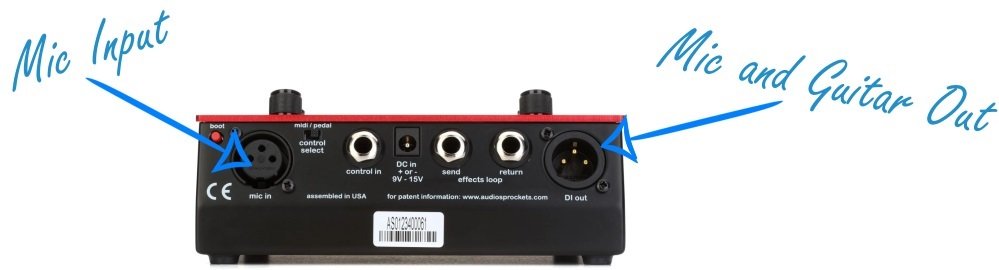
Instrument inputs are on the side, with a mic input on the back if you want to use the WaveMap feature.
I don't have a use case for this in my situation. But, if it's a feature that appeals to you and would be useful, I'd say the ToneDexter's value goes up and it would be worth researching further. To be honest, I'd be happy with it either way, though the WaveMap tech definitely contributes to the final price tag.
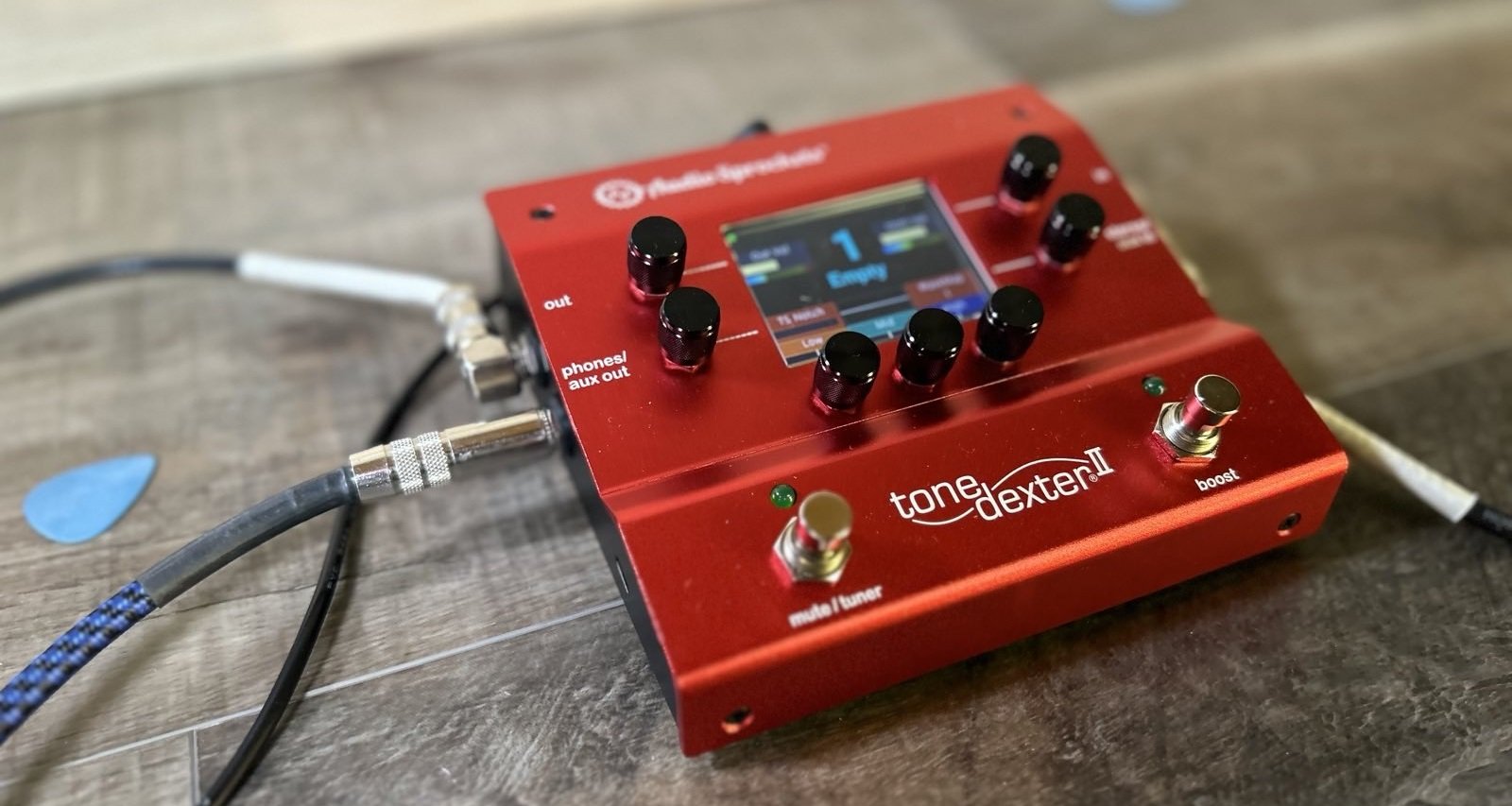
Expensive, yes, but sounds great and is built with a very slick interface.
Cost and Overall Value
The biggest problem with the ToneDexter II is that it's very expensive, close to double what you'll pay for the LR Baggs Venue DI and a few other comparable acoustic preamps. But this is fairly typical for pedals from more boutique-style companies like Audio Sprockets, especially when you have an LCD display screen involved. In this case, the WaveMap technology, as I alluded to earlier, is also contributing to the cost.
That said, it's a very nice acoustic preamp and one that I might even prefer over the LR Baggs Venue if money were no object.
Give some thought to the WaveMap feature. If you won't use that, it's more difficult to justify the cost. But even then, I'd recommend at least considering the Tone Dexter. It's just a much better experience all around, and might be a worth the hefty price tag.
Review Summary and Questions
Thanks for hanging in for my full ToneDexter II review. As mentioned, I tested this pedal in a real-world scenario and had the thing in my hands. If you have questions, feel free to reach out via the comments below. I can hopefully be of help and give you a first-person account. We'll see you there.
More Acoustic Guitar Preamp Content
Written by Bobby Kittleberger on Pedals & Questions
Written by Bobby Kittleberger on Pedals & Roundups
We link to products on Sweetwater that help support our site and keep the lights on. If you click through our orange buttons, we might earn a commission at no extra cost to you. Thank you all for your generous support over the years! ~ Bobby and Danielle
Our disclosure↬


Comment Policy: You're down to leave a comment? That's awesome. Keep in mind that comments are moderated and rel="nofollow" is in use. Please avoid any spammy keywords or a domain as your name, otherwise your comment will be deleted. Let's stay on topic, keep questions relevant and have a meaningful conversation. All the best.