
Behringer X32 VS the X Air XR18: How are they difference?
Form factor, interface setup, major price difference, network card, and more.
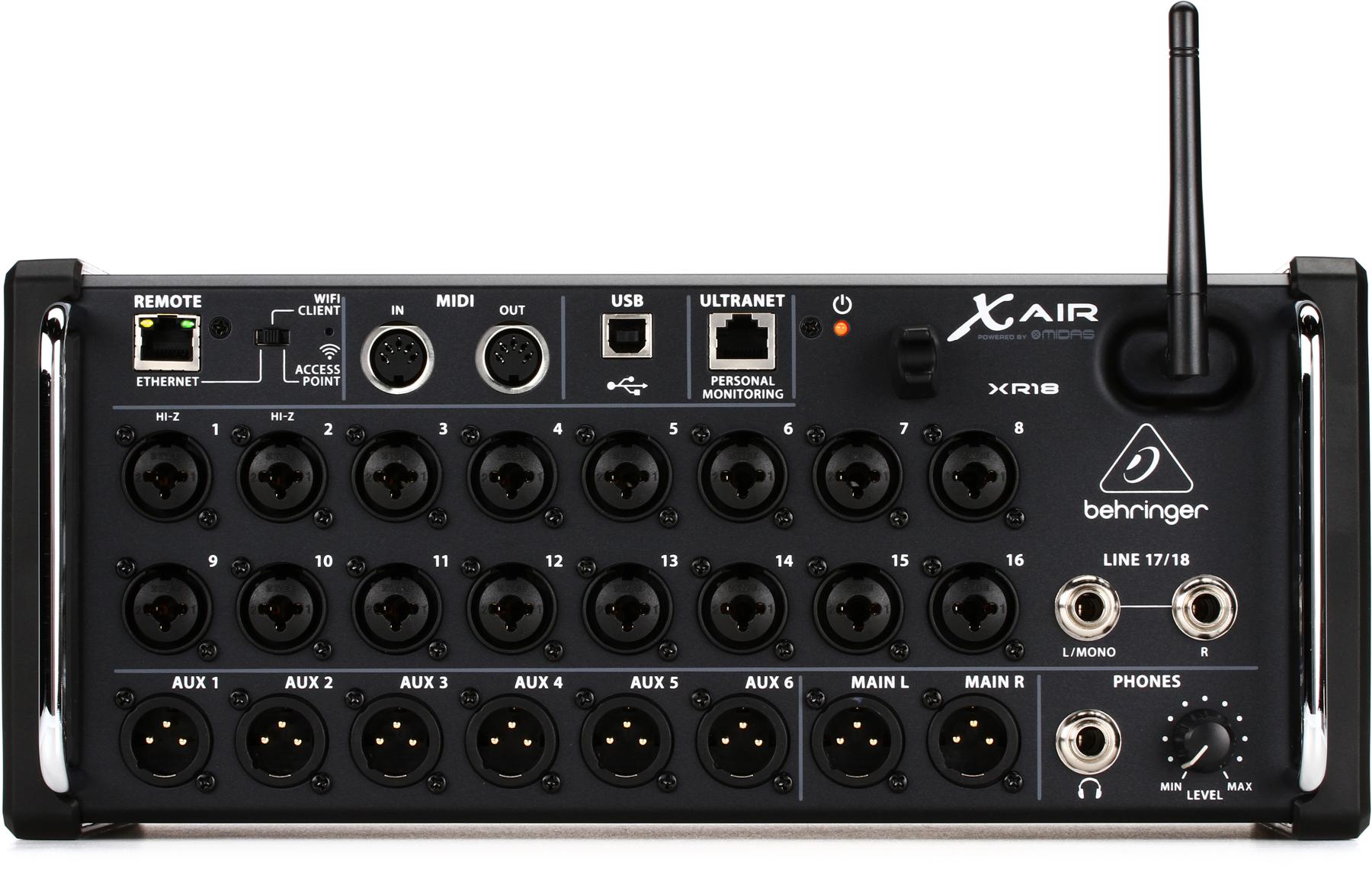
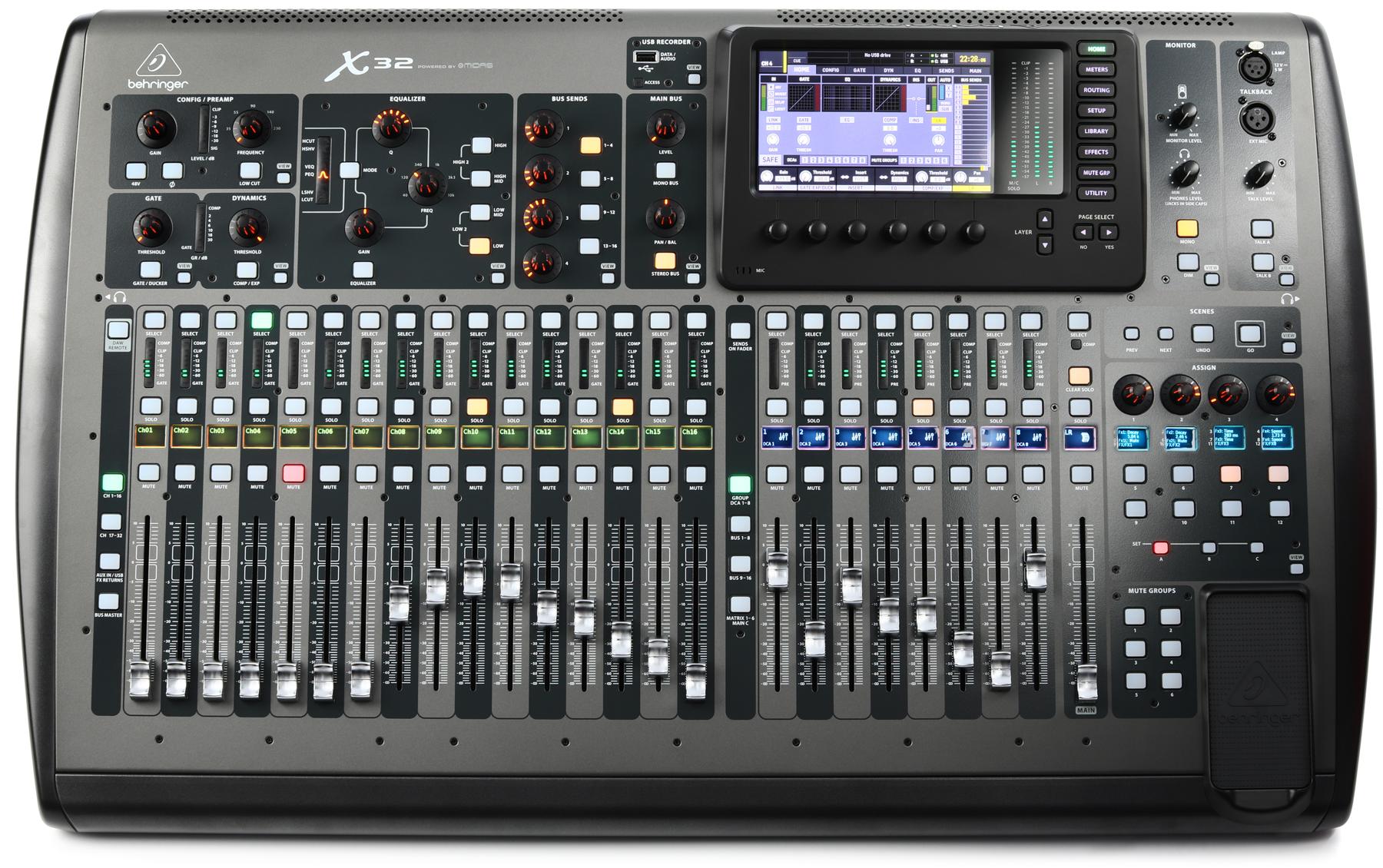
The form factor is the biggest difference here, with the Behringer X32 being the traditional mixer with a familiar board with sliders and controls. But the X Air is built to be a rackmounted unit, much smaller and more portable. However, this means you can only mix it through the included app, which may or may not be ideal. Note that the X Air has built-in Wi-Fi, so the app integration is very easy.

| Specification | Behringer X32 | Behringer X Air XR18 |
|---|---|---|
| Type | Digital | Digital |
| Channels | 40 | 18 |
| Inputs - Mic Preamps | 32 x XLR | 16 x XLR-1/4" combo |
| Phantom Power | 32 Channels | Yes (activated via remote app) |
| Outputs - Main | 16 x XLR, 2 x XLR (monitor), 2 x 1/4" TRS (monitor) | 2 x XLR |
| Outputs - Digital | 1 x XLR (AES) | None reported |
| Send/Return I/O | 1 x Dual RCA Stereo (aux in), 6 x 1/4" TRS (aux in), 1 x Dual RCA Stereo (aux out), 6 x 1/4" TRS (aux out) | None reported directly, but aux sends are available |
| Busses/Groups | 25 total (16 x bus, main LCR, 6 x matrix) | 12 x Bus |
| Inserts | Yes | Internal effects/processing inserts |
| Talkback | 1 x XLR | Not specified directly, but available through app control |
| MIDI I/O | In/Out | In/Out |
| Data I/O | 1 x Ultranet, 2 x AES50, 1 x Ethernet | 1 x Ethernet |
| USB | 2 x Type B, 1 x Type A | 1 x Type B (18 x 18) |
| Computer Connectivity | USB | Ethernet, Wi-Fi, USB (18 x 18) |
| I/O Expansion Slots | 1 x slot (32-channel USB audio interface) | N/A |
| Faders | 25 x 100mm (motorized) | N/A (Control via app) |
| A/D Resolution | 24-bit/48kHz | N/A |
| EQ Bands | 4-band EQ (channel strip), 6-band EQ (mix bus) | 100-band Real Time Analyzer (RTA) |
| Effects | Yes | 4 stereo effects/modeling engines including delay, chorus, dynamics, Lexicon reverbs |
| Signal Processing | Gate, Compressor | Comprehensive per-channel processing |
| DAW Control | Yes | N/A |
| Screen | 7" Color TFT (main), LCD with RGB Color Backlight (channel) | N/A (Control via app) |
| Power Source | Standard IEC AC cable | Standard IEC AC cable |
| Height | 7.9" | Rackmountable with included rack ears |
| Depth | 20.8" | N/A |
| Width | 35.4" | N/A |
| Weight | 45.4 lbs. | N/A |
| Rackmountable | No | Yes |
| Built-in Wi-Fi | No | Yes |
| Outputs - Other | None reported | 1 x RJ-45 Ultranet (P16-M, P16-D) |
| Headphones | 2 x 1/4" TRS (stereo) | 1 x 1/4" TRS |
| Aux Sends | Not specified directly; integrated in bus outputs | 6 x XLR |
| Features | 1 x 4-pin (lamp) | N/A |
Price Tracker for the Behringer X32 and X Air
Prices updated Fri, August 21st, 2026.
Main Differences Between the X32 and X Air (XR18)
- Inputs - Mic Preamps: The X32 has 32 XLR mic preamps, whereas the XR18 has 16 XLR-1/4" combo mic preamps.
- Outputs - Main: The X32 provides 16 XLR outputs plus additional monitor outs, while the XR18 has 2 XLR main outputs and 6 XLR aux sends.
- Outputs - Other: The XR18 includes a dedicated Ultranet port for Behringer’s P16 personal monitoring system, a feature distinct from the X32's more traditional output options.
- Busses/Groups: The X32 boasts 25 total busses (16 mix busses, main LCR, 6 matrix busses), compared to the XR18’s 12 busses.
- Built-in Wi-Fi: The XR18 includes built-in Wi-Fi for remote control, which the X32 lacks natively but can be networked for digital control.
- Form Factor: The X32 is a larger, traditional console format, whereas the XR18 is designed for compactness and portability, with a stage box/rackmount design.
- Screen: The X32 features a 7" color TFT for onboard control, whereas the XR18 relies on external tablet or computer for its interface.
Similarities
- Type: Both are digital mixers, offering a broad range of digital processing capabilities.
- Channels: High channel count, with the X32 supporting 40 channels and the XR18 supporting 18 channels.
- Mic Preamps: Both feature Midas-designed mic preamps, known for their pristine sound quality.
- Computer Connectivity: USB connectivity is available on both mixers, facilitating direct recording to a DAW.
- MIDI I/O: Each mixer has MIDI In/Out for integrating external MIDI gear.
- Effects: Integrated effects engines with dynamics, EQ, and various effects like reverb and delay.
- Phantom Power: Available on all mic channels for both mixers.
More Pro Audio Content
Written by Gear Consultants on Mixers & Roundups
Written by Bobby Kittleberger on Mixers & Dimensions
We link to products on Sweetwater that help support our site and keep the lights on. If you click through our orange buttons, we might earn a commission at no extra cost to you. Thank you all for your generous support over the years! ~ Bobby and Danielle
Our disclosure↬


Comment Policy: You're down to leave a comment? That's awesome. Keep in mind that comments are moderated and rel="nofollow" is in use. Please avoid any spammy keywords or a domain as your name, otherwise your comment will be deleted. Let's stay on topic, keep questions relevant and have a meaningful conversation. All the best.