

Blackstar Unity Bass U120 Settings Resource
Dials, Suggestions, and Tone Tips
Note: These settings are approximate and subject to the rest of your gear, They're meant to be helpful, but not exclusive..
Amp Model: Blackstar Unity Bass U120
Amp Type: Bass combo amp (120W, 1×12")
Controls: Gain with clip LED; Pad switch (active/passive); Voice switch (Classic/Modern/Flat); 3-band EQ with sweepable mid; Compressor; Chorus; Response control; Master Volume; MP3/Line In; XLR & 1/4" outputs
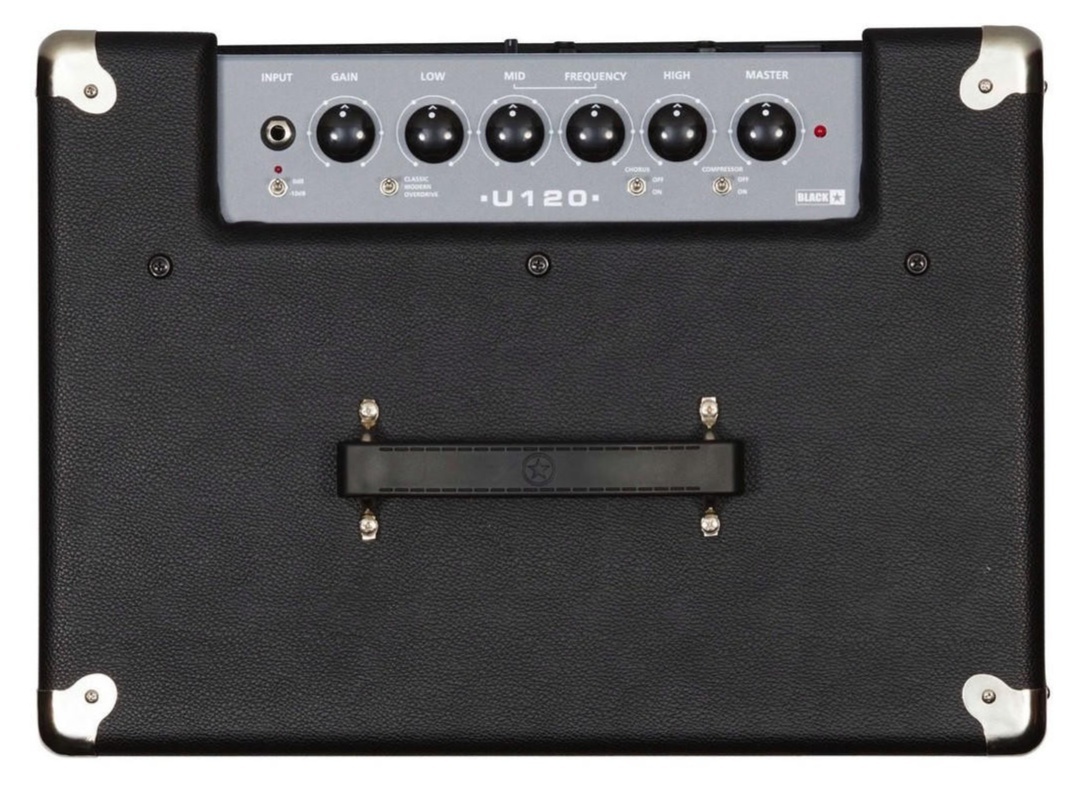
Blackstar Unity Bass U120 Settings Suggestions
Here’s a list of recommended amp settings to help you get the most out of your Blackstar Unity Bass U120 based on different playing styles and tones. These settings utilize the available controls: Gain with clip LED, Pad switch, Voice switch (Classic/Modern/Flat), 3-band EQ with sweepable mid, Compressor, Chorus, Response control, and Master Volume.
Note: Always start with the Master Volume low and increase slowly to control overall output level. Also, adjust Gain to be just below the Clip LED lighting consistently—this gives clean headroom.
 1. CLEAN AND PUNCHY (Funky, Pop, Jazz)
– Pad: Passive (unless using active bass)
– Voice: Flat
– Gain: 10–11 o’clock (watch the Clip LED)
– Bass: 1 o’clock
– Mid Frequency: 500Hz
– Mid Gain: 12 o’clock
– Treble: 1 o’clock
– Compressor: Light (9–10 o’clock)
– Chorus: Off (or subtle at 9 o’clock for warmth)
– Response: Linear
– Master Volume: Adjust to stage/room needs
 2. CLASSIC ROCK VINTAGE BITE
– Pad: Passive
– Voice: Classic
– Gain: 11–1 o’clock (dial in some edge, avoid constant clipping)
– Bass: 1–2 o’clock
– Mid Freq: 800Hz
– Mid Gain: 2 o’clock
– Treble: 12–1 o’clock
– Compressor: Medium (11–12 o’clock)
– Chorus: Off
– Response: 6L6 or 6550 (adds tube-like warmth and compression)
– Master Volume: As needed
 3. MODERN METAL/GROWL (Pick Playing, Aggressive)
– Pad: Active if using an active bass
– Voice: Modern
– Gain: 1–2 o’clock (semi-gritty)
– Bass: 2 o’clock
– Mid Freq: 900Hz–1kHz
– Mid Gain: 1 o’clock
– Treble: 2 o’clock
– Compressor: Medium to Heavy (12–2 o’clock)
– Chorus: Off
– Response: 6550 (tight low end and punchy mids)
– Master Volume: Adjust accordingly
4. SMOOTH JAZZ / WARM R&B
– Pad: Passive
– Voice: Flat
– Gain: 10 o’clock (clean tone)
– Bass: 2 o’clock
– Mid Freq: 400Hz
– Mid Gain: 11 o’clock
– Treble: 11 o’clock
– Compressor: Medium (1 o’clock)
– Chorus: On (subtle at 9–10 o’clock for warmth and width)
– Response: Linear
– Master Volume: As required
 5. SLAP BASS / FUNK POP
– Pad: Passive or Active depending on bass
– Voice: Flat or Classic
– Gain: 11 o’clock
– Bass: 2 o’clock
– Mid Freq: 600Hz
– Mid Gain: Cut slightly (10 o’clock)
– Treble: 2 o’clock
– Compressor: Medium to Heavy (12–2 o’clock, tightens peaks)
– Chorus: Optional (try at 9 o’clock for shimmer)
– Response: Linear or 6L6
– Master Volume: As needed
6. STUDIO PRECISE TONE (Ideal for DI Out or Recording)
– Pad: Based on bass type
– Voice: Flat
– Gain: 10 o’clock (clean signal)
– EQ: Flat
– Mid Freq: 700Hz
– Mid Gain: Noon
– Compressor: Engaged lightly (9 o’clock)
– Chorus: Off
– Response: Linear
– Use XLR out for direct, clean signal
 Extra Tips:
– Use Pad switch to prevent clipping with active basses.
– Use MP3/Line In for backing tracks while practicing.
– Dial in sweepable mid to carve out space in a live or studio mix.
– Use Chorus minimally or as a flavor effect on mellow or ambient tones.
– Response control emulates different power tube types — experiment with 6L6 for round warmth or 6550 for tight low-end punch.
These settings are starting points — your exact bass, playing style, and band context will influence final tweaks. Use your ear and experiment!
Gear Suggestions for the Blackstar Unity Bass U120
- Fender Jazz Bass: Offers bright articulation and a scooped midrange that pairs well with the amp’s modern voicing and built-in Chorus effect.
- Darkglass Microtubes X7 Pedal: Adds a transparent drive and parallel EQ shaping to dial in aggressive tones while maintaining low-end clarity through the U120’s flat response mode.
- MXR M82 Bass Envelope Filter: Syncs well with the amp’s clean setting and adds dynamic funk textures without overwhelming the core tone.
- Squier Classic Vibe ’60s Precision Bass: Full, vintage tones that complement the U120’s classic voicing and tube-emulated response settings.
- Electro-Harmonix Bass Big Muff Pi: Delivers thick fuzz tones and blends smoothly with the U120’s sub-octave emulation and overdrive section.
More Tone Tips and Best Practices
- Store in a dry, cool environment to prevent moisture damage and electronic degradation.
- Avoid direct sunlight to preserve the cabinet finish and internal components.
- Use moderate volume (below 50%) for home practice to maintain tonal clarity and avoid disturbing others.
- Use higher volume settings (above 75%) for rehearsals or live shows; ensure external EQ and gain staging are balanced.
- Dial in tone using Gain, Bass, Mid, and Treble controls based on playing style and venue acoustics.
- Engage Overdrive and Compression when needed for added character or sustain in live settings.
- Good for both practice and live use; 120W power and XLR out support gigging versatility.
- Use headphone output for silent practice; disable speaker output when possible.
- Use the DI XLR output for clean signal routing to mixing boards or audio interfaces during live or recording sessions.
- Allow proper ventilation when operating to avoid overheating—do not block air vents.
More Amp and Tone Settings Resources
Written by Bobby Kittleberger on Amp Settings
Written by Guitar Chalk on Song Settings
We link to products on Sweetwater and Reverb that help support our site and keep the lights on. If you click through our orange buttons, we might earn a commission at no extra cost to you. Thank you all for your generous support over the years! ~ Bobby and Danielle
Our disclosure↬

LEAVE A COMMENT