
Gibson Les Paul Studio VS Standard (Comparison)
Our pick: Gibson Les Paul Studio
We'd argue that the Standard, while a great guitar, doesn't do enough to justify the increase in price compared to the Studio. In fact, the Les Paul Studio is one of the highest-value guitars on the market, hard to beat in most one-to-one comparisons.

This is a quick comparison of the Gibson Les Paul Studio and the Gibson Les Paul Standard, particularly the '50s version. Note that there are other versions of the Les Paul Standard - namely the '60s and Slash signature models - but this comparison takes into account the general roster of features while focusing specifically on the '50s model since it's one of the more popular options.
In this comparison we'll look at the two guitars to decipher: Which one is better? Are they more ideal for particular situations? What are their strengths and weaknesses? For a quick look at the specs of both instruments, use the compare tool below, and then read on for more details about each guitar.
Read more: Best electric guitars overall
Gibson Les Paul Standard VS Les Paul Studio Comparison Tool
Guitar | Audio | Rate | Buy |
|---|---|---|---|
 | Gibson Les Paul Studio | 96.5 | |
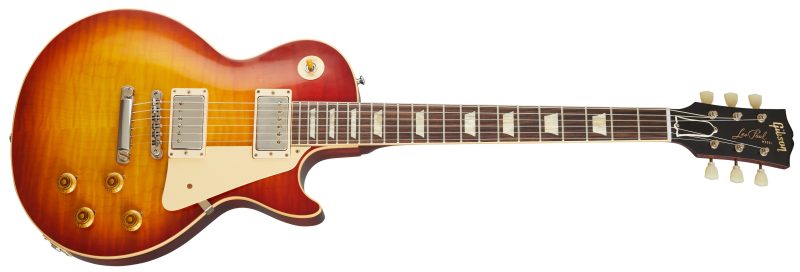 | Gibson Les Paul Standard (50s model) | 90.5 |
| Specification | Les Paul Modern Studio | Les Paul Standard '50s |
|---|---|---|
| Number of Strings | 6 | 6 |
| Body Type | Chambered Solidbody | Solidbody |
| Body Shape | Les Paul Modern Studio | Les Paul Standard '50s |
| Body Material | Mahogany | Mahogany |
| Top Material | Maple | Maple |
| Body Finish | Nitrocellulose Lacquer | Gloss Nitrocellulose Lacquer |
| Color | Smokehouse Satin | Tobacco Burst |
| Neck Material | Mahogany | Mahogany |
| Neck Shape | Slim Taper, Contoured Heel | Vintage '50s |
| Neck Joint | Set Neck | Set Neck |
| Radius | 12"-16" Compound | 12" |
| Fingerboard Material | Ebony | Rosewood |
| Fingerboard Inlay | Acrylic Trapezoid | Acrylic Trapezoids |
| Number of Frets | 22 | 22, Medium Jumbo |
| Scale Length | 24.75" | 24.75" |
| Nut Material | GraphTech | GraphTech |
| Bridge/Tailpiece | Aluminum Nashville Tune-O-Matic & Stop Bar | ABR-1 Tune-O-Matic with Stopbar |
| Tuners | Grover Rotomatic | Vintage Deluxe |
| Neck Pickup | Gibson 490R Humbucker | Burstbucker 1 Humbucker |
| Bridge Pickup | Gibson 498T Humbucker | Burstbucker 2 Humbucker |
| Controls | 2 x volume (push/pull coil-split), 1 x tone (push/pull phase), 1 x tone (push/pull pure bypass) | 2 x volume, 2 x tone |
| Switching | 3-way toggle pickup switch | 3-way toggle pickup switch |
| Case/Gig Bag | Softshell Case | Hardshell Case |
Main Similarities
- Both guitars have mahogany bodies with maple tops.
- Both feature a nitrocellulose lacquer finish.
- They share a common body shape, the iconic Les Paul.
- Each guitar has 22 frets and a scale length of 24.75".
- They use the same type of nut material (GraphTech).
- Both models are equipped with a 3-way toggle pickup switch.
Main Differences
- Body Type: The Modern Studio has a chambered solidbody, while the Standard '50s has a solidbody.
- Neck Shape: Modern Studio features a Slim Taper with a contoured heel; Standard '50s has a Vintage '50s profile.
- Fingerboard Material: Ebony on the Modern Studio, Rosewood on the Standard '50s.
- Radius: Modern Studio uses a compound radius (12"-16"), while the Standard '50s has a fixed 12" radius.
- Pickups: Modern Studio uses Gibson 490R and 498T humbuckers; Standard '50s uses Burstbucker 1 and 2.
- Controls and Features: The Modern Studio offers advanced switching options (coil splits, phase switch, and pure bypass) whereas the Standard '50s maintains a more traditional setup.
- Tuners: Grover Rotomatics on the Modern Studio versus Vintage Deluxe on the Standard '50s.
- Finish Color and Case: Smokehouse Satin with a softshell case for the Modern Studio, Tobacco Burst with a hardshell case for the Standard '50s.
As you can probably tell from the price, the Studio is a more stripped-down version of the more expensive Standard and Custom Les Paul models. While this doesn't mean it's a poor-quality guitar, it's certainly in a lower quality tier than the Standard. Let's look individually at both instruments.

Headstock of a Gibson Les Paul Studio. Flickr Commons image via Jesse Menn
Gibson Les Paul Standard ('50s model)

The Gibson Les Paul Standard is more expensive, but is the extra cost worth it? Flickr Commons image via Shixart1985
The '50s and '60s Les Paul Standard models ship with Gibson Burstbucker pickups, which are (unfortunately) missing in the Les Paul Studio. This alone will cause some reduction in price.
At $2500, the Standard is roughly $1000 higher than the Studio, though sounds appreciably similar and doesn't deviate significantly in the specs sheet, outside of the pickup upgrade. We see some nuanced reduction in hardware quality (Nashville Tune-O-Matic bridge with a Stopbar to the ABR-1), but there just isn't a ton of substance that sets the '50s Standard apart from the Studio.
Gibson Les Paul Studio

Gibson does a great job of keeping the cost of the Studio low compared to other LP models. Image via Gibson
In the Studio, we've already mentioned the downgrade in pickups, and the modest shift in bridge hardware. We do get Grover tuning machines and the same Les Paul Mahogany body and Rosewood fingerboard that we see in the Standard. Outside of the lack of Gibson Burstbuckers, there isn't much to complain about on the Studio's spec sheet.
To us, the Studio is a solid baseline model that could, perhaps, be upgraded later with a standalone set of Burstbucker pickups, if desired. Again, there's not enough downgrades in the Studio to really make us want the Standard model more.
Summary of Comparison
If you're trying to justify the extra $1000 in the Standard, the Burstbucker pickups could account for a small chunk of that. But there's a lot of nuance in play here that makes the Standard's upgrades harder to spot. It's also just an issue of mystique and the historical appeal of the Standard series.

The Les Paul Standard has some historical appeal, but we'd take the Studio for $1500. Flickr Commons image via Shixart1985
The Studio is made to be a more economic and budget-friendly guitar, yet Gibson has done it without taking too many shortcuts. If you really value the vintage appeal of the '50s Standard, then it might be worth the investment for the historical value and for the Gibson Burstbucker humbucker set.
Otherwise, we'd recommend saving the money and going with the Gibson Les Paul Studio.
If you have questions about either guitar, feel free to drop them in the comments section below and we'll do our best to assist.
More Gibson Les Paul Comparisons
- Gibson Les Paul Standard 50s VS 60s
- Gibson Les Paul Studio VS Special
- Full Gibson Les Paul Dimensions
- Best Gibson Les Paul Alternatives
- Best Amp for Les Paul Junior
- Best Amp for Les Paul Studio
- Best Overall Gibson Les Paul (best value)
- Les Paul Custom VS Standard
- Les Paul Classic VS Standard
- Gibson Les Paul Comparison Table
- Best Cheap Gibson Les Pauls Overall
We link to products on Sweetwater that help support our site and keep the lights on. If you click through our orange buttons, we might earn a commission at no extra cost to you. Thank you all for your generous support over the years! ~ Bobby and Danielle
Our disclosure↬


I have a New Gibson Slash LP, a 50s LP Standard Gibson. I also have (2) 2014 Studio pro Les Pauls. When Gibson offers Studio Deluxe models like the Studio Pro, Studio Deluxe and other limited production model which usually have upgraded pickups for a small premium, To me is the best bang for your buck. Especially on the used market.
That’s an awesome collection, and I agree on the limited production models.
I have both the Studio LP 60s and the Standard. The studio actually gets used a lot more, It’s about 1.5LBs lighter, has a much bigger acoustic presence and a bit hotter pickups, especially in the bridge. It’s a very good looking guitar in the fire burst finish as well. The standard has the binding as well as the cherry stain on the back and figured top and Grovers, but to a blind man, the studio has the advantage…..
Thanks for sharing, Mike. Great perspective and good to hear from someone who has both.
Hi, I’d like to replace the tuners on my LP Studio ’93.
It’s hard to find out what were the originals.
Some articles say the Gibson Kluson style tuners, while other say Groovers.
Can you help me with this?
Serial nr.: 91123357.
For now I have Gordon Smith tuners; they’re good but I’d like the originals (goldplated).
Thereby, above each tuner now is a whole, so the old ones must been haved screwed.
Hey Frans – I assume it’s a Gibson LP Studio ’93 and not Epiphone?
Hi Bobby, it indeed is a Gibson LP Studio.
Frans – are you able to tell what kind of tuners are currently installed on the guitar? I would venture a guess that they’re Grovers, but is there any markings or info on them that give them away?
Hi Bobby, they are GS-tuners (Gordon Smith) an old brand from England, I believe.
And above each of them there’s a little hole, obviously from the tuners Gibson delivered.
My best guess would be these, the Gibson reissue tuners: https://www.gibson.com/en-US/Gear/Tuning/PMMH-040/default
A Studio LP usually came with the traditional Kluson type tuners.https://www.amazon.com/Kluson-SD90SLN-Tuners-Gibson-Nickel/dp/B006X0TBLA/ref=sr_1_4?adgrpid=1345802796312606&hvadid=84112998025290&hvbmt=bp&hvdev=c&hvlocphy=54302&hvnetw=o&hvqmt=p&hvtargid=kwd-84113018411342%3Aloc-190&hydadcr=29623_14610025&keywords=kluson+style+tuners&qid=1659293511&sr=8-4
Even the newer ones? Doesn’t look like it based on this page: https://www.gibson.com/en-US/Guitar/USAYNB363/Les-Paul-Studio/Wine-Red